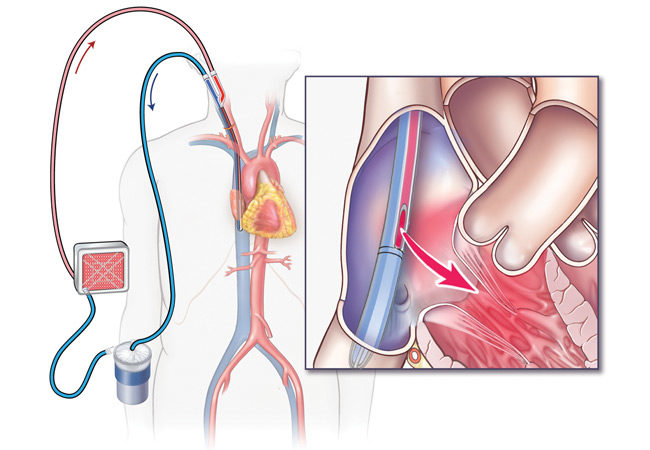
What Is Mechanical Circulatory Support (MCS)?
Mechanical Circulatory Support refers to a group of medical devices that help the heart pump blood throughout the body. MCS is used when the heart is too weak to maintain adequate circulation despite medications and standard treatments.
MCS can be used:
- Temporarily (short-term support)
- Long-term (as durable support)
- As a bridge to recovery, transplant, or decision
Types of Mechanical Circulatory Support
- Intra-Aortic Balloon Pump (IABP)
- A balloon placed in the aorta
- Improves blood flow and reduces heart workload
- Used short-term in heart attacks or cardiogenic shock
- Percutaneous Ventricular Assist Devices
- Includes devices like Impella
- Inserted through blood vessels
- Provides immediate heart support in emergencies
- Ventricular Assist Devices (VADs)
- Surgically implanted pumps
- Support left, right, or both ventricles
- Used for long-term heart failure management
- Total Artificial Heart (TAH)
- Replaces both ventricles
- Used in selected patients awaiting transplant
What Is ECMO?
Extracorporeal Membrane Oxygenation (ECMO) is a form of advanced life support that temporarily takes over the function of the heart, lungs, or both. Blood is pumped outside the body to a machine where it is oxygenated and carbon dioxide is removed, then returned to the body. ECMO is used in critical, life-threatening conditions when conventional treatments fail.
Types of ECMO
-
Veno-Arterial (VA) ECMO
- Supports both heart and lung function
- Used in cardiogenic shock or cardiac arrest
-
Veno-Venous (VV) ECMO
- Supports lung function only
- Used in severe respiratory failure (e.g., ARDS)
Conditions Treated with MCS & ECMO
These therapies are used in patients with:
- Severe heart failure
- Cardiogenic shock
- Massive heart attack
- Cardiac arrest
- Post-cardiac surgery failure
- Severe pneumonia or ARDS
- Severe COVID-19 or viral lung infections
- Pulmonary embolism
- Acute myocarditis
- Heart or lung transplant support
How MCS & ECMO Work
-
MCS Devices
- Assist or replace the heart's pumping function
- Improve blood flow to vital organs
- Reduce workload on the heart
-
ECMO System Components
- Cannulas (tubes) inserted into blood vessels
- Pump to circulate blood
- Oxygenator (artificial lung)
- Heat exchanger
The system continuously monitors blood flow and oxygen levels.
Duration of Support
- MCS: Days to years (depending on device)
- ECMO: Usually days to weeks
These therapies are not permanent solutions (except durable VADs) but provide time for recovery or further treatment.
Risks and Complications
While life-saving, MCS and ECMO carry risks:
- Bleeding due to blood thinners
- Infection
- Blood clots
- Stroke
- Organ failure
- Device malfunction
Patients are closely monitored in intensive care units to reduce risks.
Recovery and Weaning
- Gradual reduction of device support as heart or lung function improves
- Imaging and blood tests guide decisions
- Some patients recover fully
- Others may require long-term devices or transplant
Life After MCS or ECMO
Outcomes depend on the underlying condition and response to treatment. Many patients regain normal or near-normal function, while others may need:
- Long-term medications
- Cardiac rehabilitation
- Lifestyle changes
- Ongoing specialist care
Emotional and Family Support
MCS and ECMO can be emotionally challenging for patients and families. Counseling, education, and support services are often provided to help families understand treatment goals and expectations.
When to Consider These Therapies
MCS and ECMO are considered when:
- The heart or lungs fail suddenly
- Medications and ventilation are insufficient
- The condition is potentially reversible or a bridge to definitive treatment