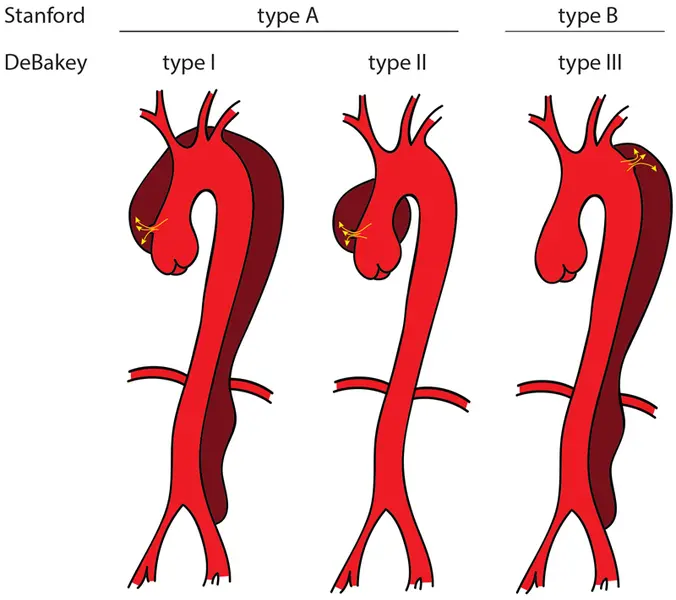
Aortic dissection is a serious and life-threatening medical emergency involving the aorta, the largest artery in the body. It occurs when a tear develops in the inner layer of the aortic wall, allowing blood to flow between the layers and forcing them apart. Early diagnosis and prompt treatment are critical to survival.
This article explains everything a patient and family need to know about aortic dissection.
What Is the Aorta?
The aorta is the main artery that carries oxygen-rich blood from the heart to the rest of the body. It has three layers:
- Intima – inner layer
- Media – middle muscular layer
- Adventitia – outer layer
In an aortic dissection, a tear in the intima allows blood to enter the middle layer, creating a false channel (false lumen).
What Is Aortic Dissection?
Aortic dissection occurs when the layers of the aortic wall separate due to high pressure blood flow. This can block blood supply to vital organs such as the brain, heart, kidneys, and intestines, and may lead to rupture of the aorta.
It is a medical emergency that requires immediate attention.
Causes and Risk Factors
Common causes and risk factors include:
- Long-standing high blood pressure
- Atherosclerosis (hardening of arteries)
- Connective tissue disorders (Marfan syndrome, Ehlers-Danlos)
- Congenital heart defects (bicuspid aortic valve)
- Trauma or severe chest injury
- Pregnancy (rare)
- Cocaine or stimulant drug use
- Previous heart or aortic surgery
Symptoms of Aortic Dissection
Symptoms often start suddenly and may include:
- Severe chest or upper back pain (described as tearing or ripping)
- Pain radiating to the neck, jaw, or abdomen
- Sudden shortness of breath
- Loss of consciousness
- Stroke-like symptoms
- Weakness or paralysis
- Difference in blood pressure between arms
Symptoms can vary depending on which organs are affected.
How Is Aortic Dissection Diagnosed?
Prompt imaging is crucial. Tests include:
- CT angiography (CTA) – most common and fastest
- Transesophageal echocardiography (TEE)
- MRI (in stable patients)
- Chest X-ray (may show widened mediastinum)
Blood tests help rule out other causes but do not confirm dissection.
Treatment of Aortic Dissection
Emergency Medical Management
- Immediate blood pressure and heart rate control
- Strong pain relief
- Intensive care monitoring
Surgical Treatment
Type A Dissection
- Emergency open-heart surgery
- Replacement of the affected aorta
- Possible aortic valve repair or replacement
Type B Dissection
- Treated with medications if uncomplicated
- Endovascular stent graft (TEVAR) or surgery if:
- Persistent pain
- Organ damage
- Aortic rupture or expansion
Recovery and Hospital Stay
- ICU stay: several days
- Total hospital stay: 1–3 weeks
- Long-term follow-up is essential
Recovery time varies depending on surgery type and complications.
Life After Aortic Dissection
Survivors require lifelong care, including:
- Strict blood pressure control
- Regular imaging (CT or MRI)
- Long-term medications (beta-blockers, antihypertensives)
- Lifestyle changes:
- Low-salt diet
- Regular light exercise
- Avoid heavy lifting and extreme exertion
- No smoking
Possible Complications
- Aortic rupture
- Stroke
- Heart attack
- Kidney failure
- Organ ischemia
- Re-dissection or aneurysm formation
Early treatment greatly reduces these risks.
When to Seek Emergency Help
Call emergency services immediately if you experience:
- Sudden severe chest or back pain
- Collapse or fainting
- Stroke-like symptoms
- Uncontrolled high blood pressure with chest pain
Prognosis
- Untreated Type A dissection has a very high mortality rate
- Early surgery significantly improves survival
- With proper long-term care, many patients live full and active lives